Umrah is one of the most significant acts of worship in Islam, offering believers an opportunity to seek forgiveness, purification, and closeness to Allah. While it is not obligatory like Hajj, performing Umrah holds immense spiritual rewards.
Understanding the full process from preparation to completion is essential to ensuring your journey is smooth, meaningful and spiritually fulfilling.
Step 1: Spiritual and Practical Preparation
Spiritual Readiness
Before embarking on Umrah, it is important to prepare your heart and intentions. This includes:
- Sincere intention (Niyyah)
- Seeking forgiveness
- Making amends with others
- Increasing عبادات such as prayer and Quran recitation
Practical Preparation
- Valid passport and visa
- Booking flights and accommodation
- Packing essentials (Ihram, comfortable clothing, toiletries)
- Learning the rituals of Umrah
This preparation, both spiritual and practical lays a foundation for a rewarding journey. Next, pilgrims transition into a new state as they approach the actual rituals.
Step 2: Entering the State of Ihram
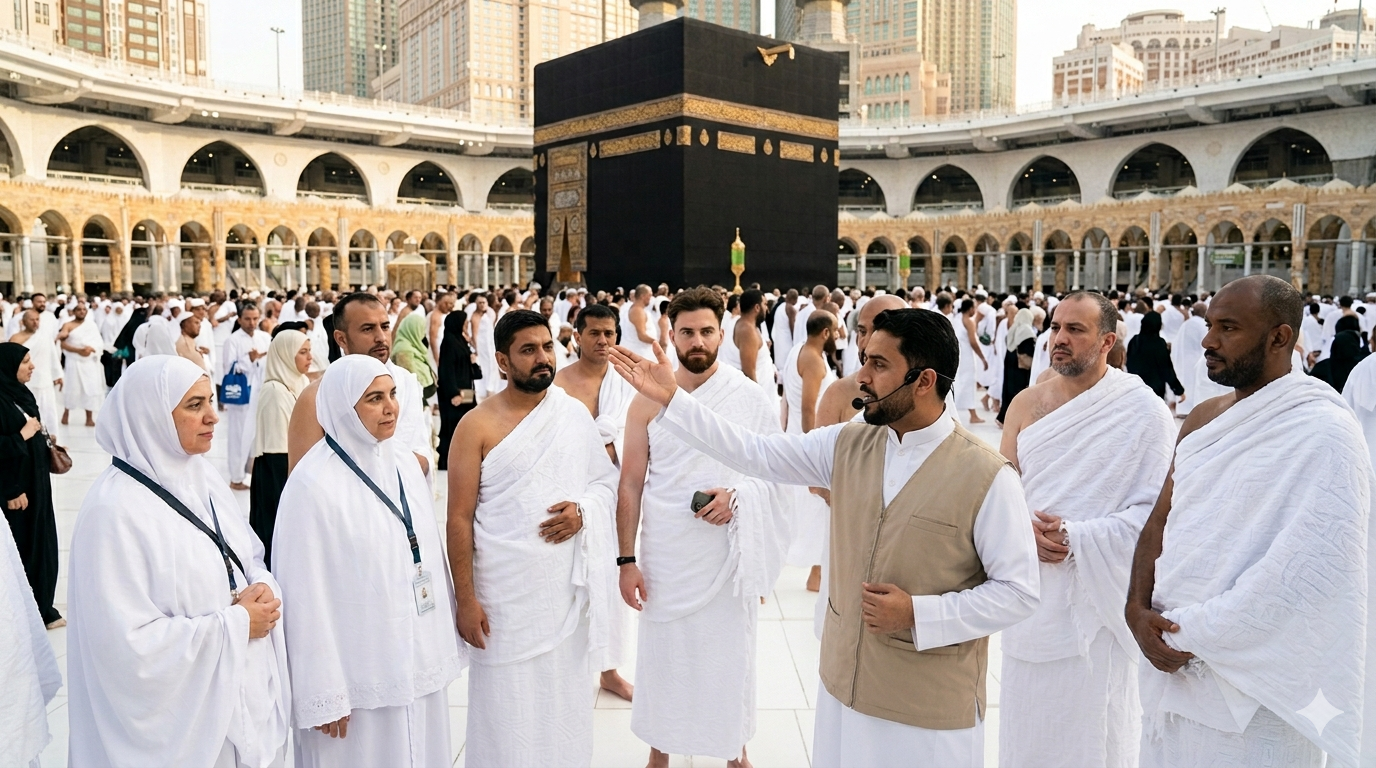
Ihram is a sacred state that pilgrims enter before performing Umrah. In this state, pilgrims must follow specific practices:
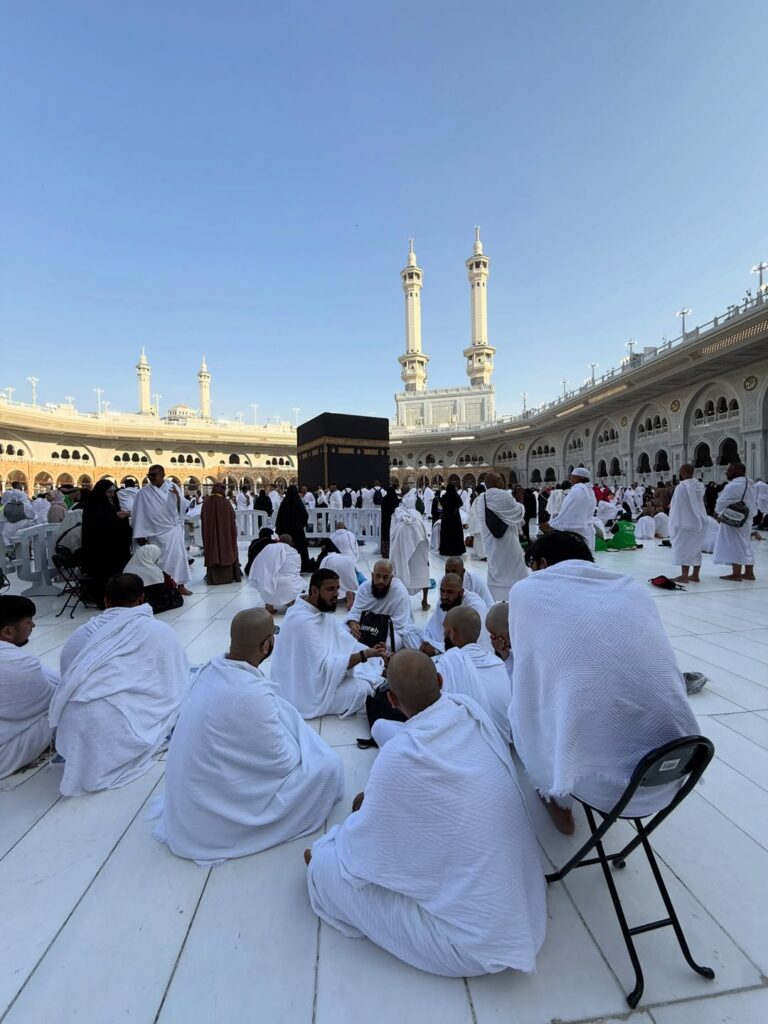
- Wearing prescribed clothing (for men)
- Making intentions for Umrah
- Reciting Talbiyah
Once in the state of Ihram and after crossing the Miqat, you are ready for the next major step: arriving in Makkah to begin your rituals.
Step 3: Arrival in Makkah and Performing Tawaf
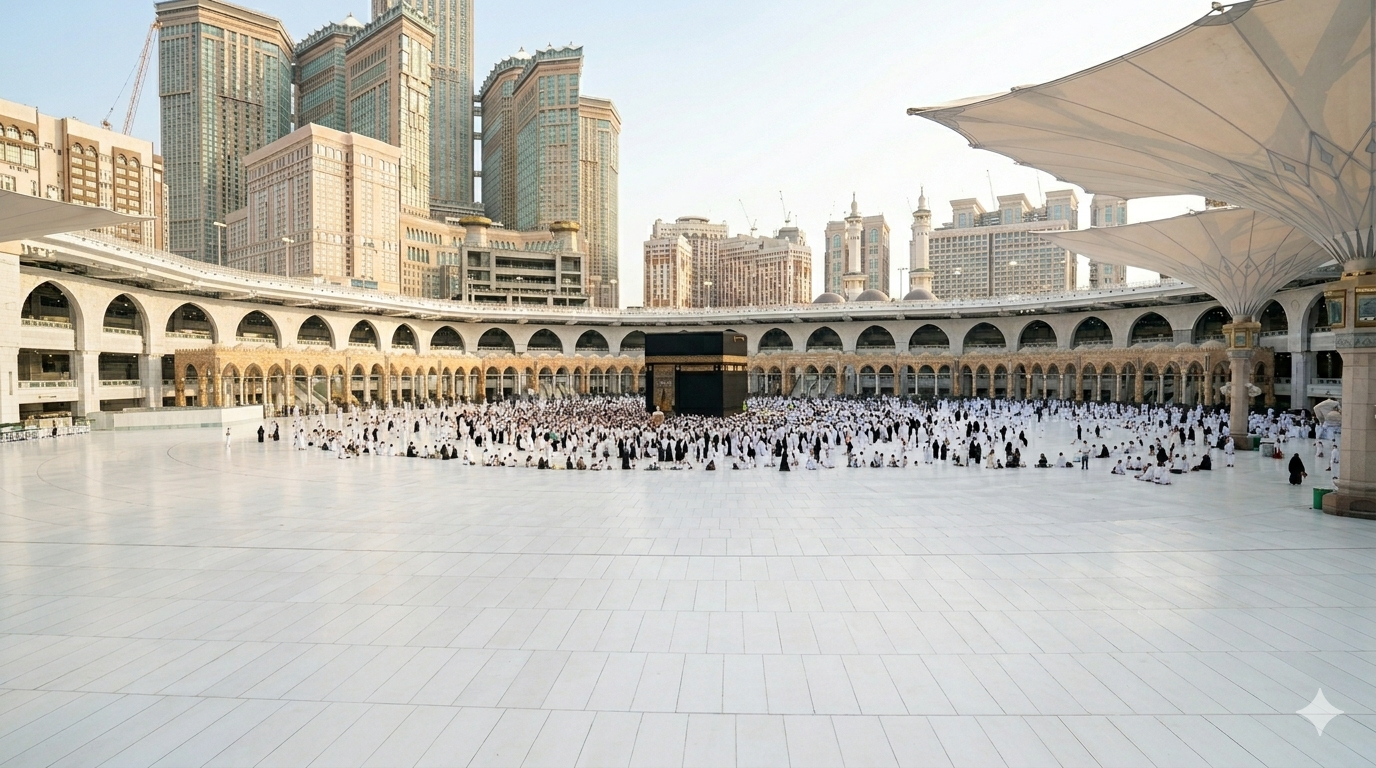
Upon reaching Masjid al-Haram, pilgrims begin their Umrah by performing Tawaf, circling the Kaaba seven times.
Key Points:
- Start at the Black Stone (Hajj-e-Aswad)
- Maintain humility and focus.
- Recite duas and supplications.
With Tawaf complete, your worship continues with the next step: Sa’i between Safa and Marwah, deepening your spiritual experience.
Step 4: Sa’i Between Safa and Marwah
After completing Tawaf, pilgrims perform Sa’i by walking seven times between the hills of Safa and Marwah in the mosque complex, beginning at Safa and ending at Marwah.
This ritual commemorates the struggle of Hazrat Hajra (AS) and teaches patience, trust and perseverance.
Step 5: Halq or Taqsir (Hair Cutting)
The final step of Umrah is:
- Halq: Shaving the head (recommended for men)
- Taqsir: Trimming the hair
Women fulfill this step by cutting a small portion of their hair, usually about a fingertip’s length.
With hair cutting complete, you have finished the key rituals of Umrah. However, your spiritual journey does not end here, let’s consider the next steps.
Step 6: Post-Umrah عبادات
Even after completing Umrah, pilgrims are encouraged to:
- Offer voluntary prayers
- Spend time in Masjid al-Haram.
- Make dua and seek forgiveness.
The spiritual journey continues beyond the rituals.
Common Mistakes to Avoid
- Lack of preparation
- Incorrect Ihram practices
- Rushing through rituals
- Ignoring the spiritual aspect
By staying aware of these common mistakes, you can transition to a smoother, more rewarding experience. Consider these additional tips to further prepare.
Tips for a Smooth Experience
- Stay hydrated and well-rested.
- Follow group leaders or guides.
- Keep a checklist of rituals.
- Maintain patience in crowds.
Conclusion
Understanding the full Umrah process enables pilgrims to perform each step with confidence and devotion. From preparation to completion, every stage carries deep spiritual significance.
With proper knowledge and sincere intention, Umrah becomes not just a journey but a transformative, life-changing experience that lasts forever.